






Last year, rather than spending my semester studying at Worcester State University, I chose to spend it 7000 miles away, studying abroad in South Korea. When I arrived, I had expected to be culture-shocked, severely out of my element, and lost. But in truth, this didn’t really happen; instead, I gained entirely new perspectives and learned quite a bit about both myself and South Korea, as I lived and studied there.
I was not entirely alone for this trip, I was accompanied by another Worcester State student, a business major named Rowan Walmsley. Our travel and enrollment there was facilitated by The Education Abroad Network (TEAN). We arrived in Seoul on February 27th, 2025, at around 11:00 PM KST. From there, we, along with other abroad students we met at the airport, were picked up by TEAN representatives and brought to a hotel where we stayed for two nights, getting ourselves acclimated and getting a small orientation of sorts. During that time, I became acquainted with many of the other students I would spend most of my time with. We took independent walks around the area and got food to eat together as we settled in.
After those 2 nights, we were brought to the dormitories of Hanyang University in preparation for the start of classes. To be honest, I was not the biggest fan of the dorms. They were located off campus and on top of a hill. Which is a trend for quite a few things in Seoul. The rooms themselves were quite small, the beds were akin to sleeping on a table, and for our room at least, we had the incredible view of… An empty courtyard that no one was allowed to go to, how stunning.
That being said, it wasn’t all bad, there were study rooms and a gym conveniently located in the basement of the dorm, and we were in close proximity to basically everything we would need for our stay. Restaurants were in no short supply, and a mall with every form of store one could need was also quite close by. In fact, on our first night me, my roommate, and two others we had just met that night, all walked to that mall to buy supplies for our rooms, and we found everything we needed for the whole semester.
The area we lived in was rather tourist-friendly, the locals were kind and patient, and everything had translations. Many restaurants utilized kiosks that you could translate at the touch of a button. So most things fell into place rather quickly, and mentally speaking, I was quite content, the culture shock I had expected never really came to pass. What I really didn’t expect was the city itself. The common image of Seoul is of a glittering metropolitan city, with incredible, shining skyscrapers dotting the skyline or awe-inspiring monuments. But living there showed me what it is truly like. Seoul is beautiful, make no mistake, and many of the images one can find do represent what the city is like. It’s more than just beautiful. There are areas that do not fit the common perception. Like run-down and cramped alleyways, decrepit old buildings, or broken and ill-maintained streets. One day as I was late to class, I had to walk up a staircase, with steps so broken that they were angled down. This proved to be nearly catastrophic, as I almost lost my footing on those steps, though I thankfully caught my balance last second. Living in Seoul proved to be a humbling reminder. For one thing, to watch my feet. And for another, there is more to a place than what one can find on Google images. It is a place that is lived in, ages, and breaks in certain places. It is real.
Naturally, I didn’t go abroad to spend my entire time hanging around the dorm and going to classes. I went to see Seoul. There were quite a few trips planned by both TEAN and the university itself, and I and others also planned our own excursions as we saw fit. In both cases, getting around relied on Seoul’s subway system. Now, as someone who has spent most of their life in Worcester, Massachusetts, I’m not very familiar with subway systems or how they work. But as I was without a car for four months, I had to “get on board”, if you will, if I wanted to do anything. There was a bit of a learning curve that I had to get over, but in time, it all became quite natural. The subway stations themselves were sights in their own right. Like a city under the city. With convenience stores, clothing shops, and handcrafted goods for sale, beautiful underground gardens, and plenty of food courts for whenever travel got us peckish.
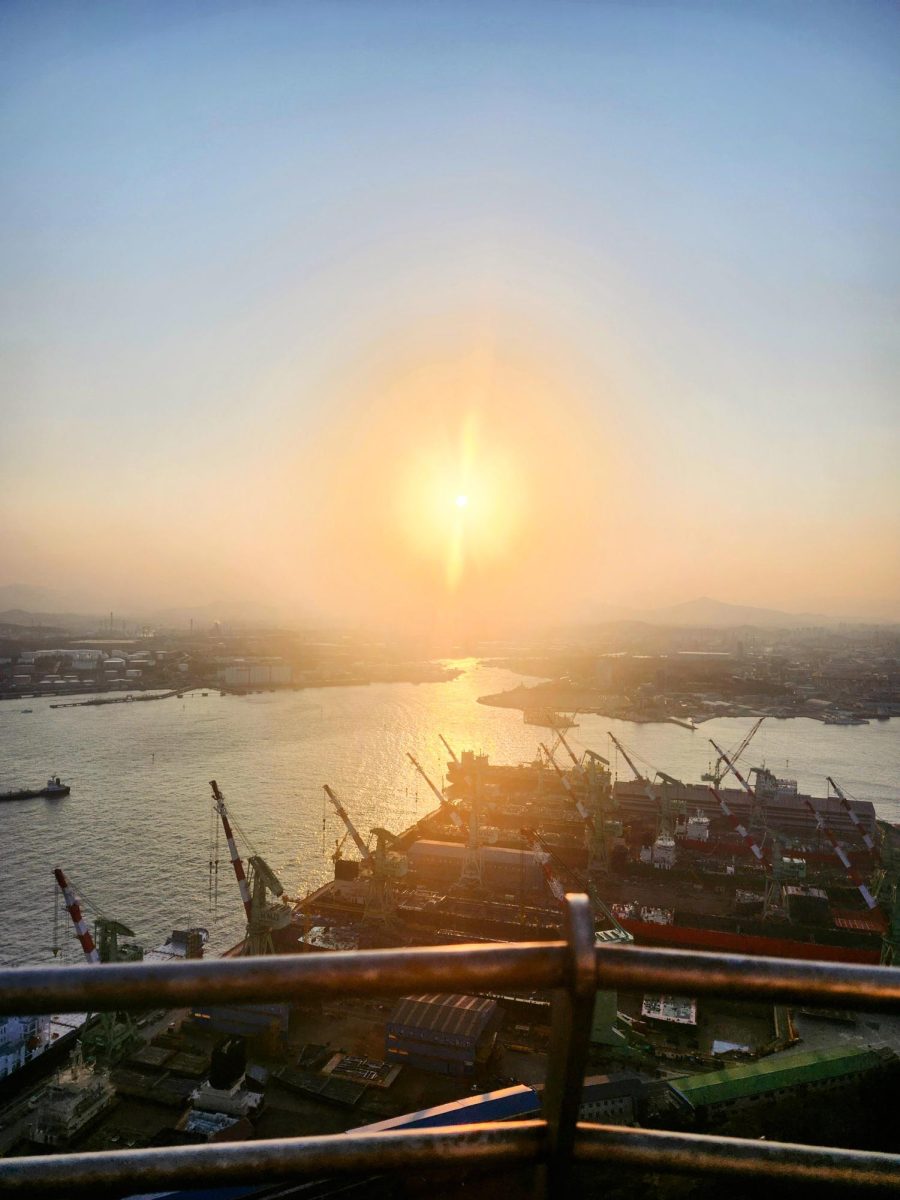
One of the first sights we got to see was just before the start of classes, and it was a big one. Literally. After having us participate in a scavenger hunt/tour around parts of Seoul, TEAN provided us with tickets to see the Seoul Sky Tower. It is, at 1,821 feet tall, the tallest building in South Korea, and the sixth tallest building on the planet. Just getting up the tower required a high-speed elevator that took us up 121 floors in about a minute. So fast, I actually felt the pressure in my ears changing. The 121st floor was a lobby of sorts, with seating, food, and an overpriced gift shop. And on the edges of the floor was an observatory, with windows, telescopes, and thick glass floors that let you see all the way to the ground. Definitely not for those with a fear of heights. The tower itself is built into the Lotte World mall, which my group and I explored after seeing the tower. It truly is the most incredible mall I have ever seen. It is massive for one thing. Divided into four buildings, one of which was a staggering 12 floors, with just about every kind of shop and amenity someone could need. From clothing stores, to book shops, to restaurants, to an aquarium and movie theater. We spent hours exploring and didn’t even see it all. I went back another two times and still didn’t get to see it all.
One of my favorite trips was the trip to Gyeongbokgung Palace, a major historical site in South Korea. It is an amazing 415,800 square meter palace that once served as the seat of the Joseon dynasty. Admission to the palace varies based on attire. If you are wearing standard clothes, you have to wait in a long line to be allowed in. But if you were wearing a hanbok, a traditional form of Korean attire, you were allowed in far quicker. TEAN secured rental hanboks for us and we were given free reign to explore. We got to see palace buildings, old ruins, gardens and tree groves. It was pretty hot, and the hanboks did not breathe super well, but we had a great time walking around and taking pictures of everything regardless.
Seoul itself is divided into a number of districts and neighborhoods. Many of which build up their own cultures and attractions. Itaewon, for example, is effectively Seoul’s club district. It is where you go if you want to hit a bar or nightclub. Personally, this is not my thing, and the few times I did go with a group of friends only served to confirm that, for me at least. The main streets were crowded, filled with mobs of people moving from one place to the next, or long lines of people trying to get in. I once almost lost my group as we were making our way to a particularly popular nightclub. The sidewalks are packed with taxis and Ubers waiting to pick people up to go home, though it is at times difficult to actually get a ride home with the sheer volume of people trying to use the services. As I learned the hard way, one Friday night at 1 in the morning. Hongdae is a well-known shopping district, a mix of small businesses, street vendors, and shopping centers. It also has a well-renowned indie art scene. I was able to see several street performers during my visits there, from comedy skits that I couldn’t really understand, to magic shows, to musical performances, even late into the night. The Dongdaemun district was really interesting, mostly for its quite varied architecture. It had more contemporary metropolitan building design, mixed in with more historical architecture, like the Dongdaemun Gate. And in the center of it all, the rounded and rather bulbous Dongdaemun Design Plaza. While there, Rowan and I had the pleasure to see a parade in honor of the Buddha’s birthday. It boasted some really incredible floats and performances, with an impressive amount of pyrotechnics.
It’s interesting how, given enough time, almost any place can start to feel like a home, even if only a little. Earlier, I mentioned how I didn’t much enjoy the dorms, and it’s true, they were inconveniently placed, cramped, and uncomfortable. But even so, I came to regard it in a similar way I see my home now. A place to slow down, and unwind. After every trip, every day out, or even just after a long day of classes, I looked forward to heading back into the dorm. The lock on the handle would make a sound when we unlocked it, and it came to signal for me, “the day is over, take a breath.”
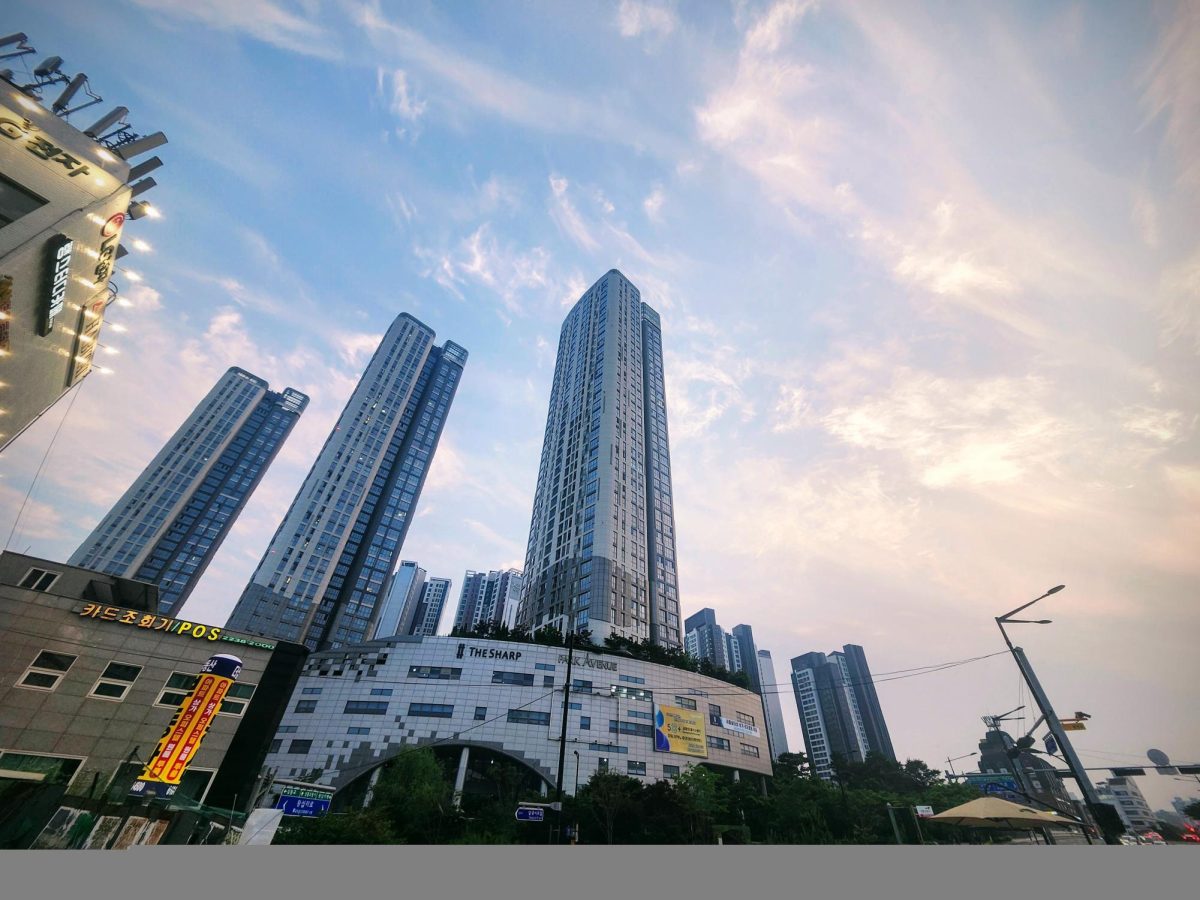
I often liked to take walks in the area around the dorm, just stroll around wherever I found myself going. Some days I would follow a usual path I had constructed, some days I would take lefts instead of rights, and others rights instead of lefts. But as the weeks went by, I noticed I had stopped checking where I was or how to get back on my phone. I had made landmarks for myself, telling me how to get back “home”. The biggest of these landmarks was The Sharp buildings, a trio of apartment buildings that towered over the rest. I could see them from almost anywhere in the surrounding area, and in a way, those buildings really came to, in my head, embody this little slice of home I made for myself in Seoul.